


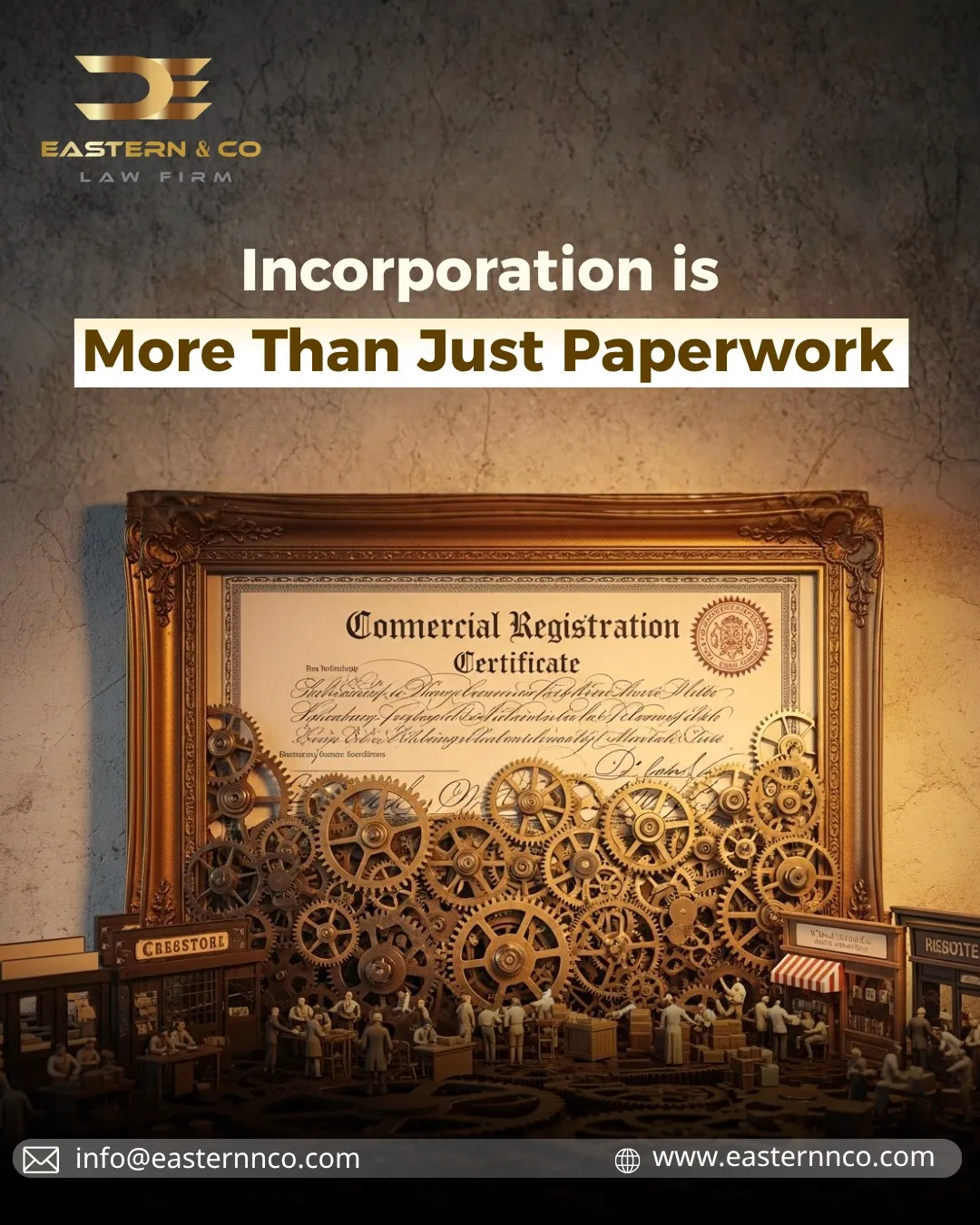
ncorporation is More Than Just Paperwork
In today’s fast-paced business environment, many entrepreneurs believe that success rests solely on a disruptive idea or massive funding. However, practical experience confirms that the Legal Infrastructure is the backbone that carries this ambition. A mistake during the initial stages of incorporation might not appear immediately, but it often turns into a "legal time bomb" that threatens the entity’s continuity at the first sign of dispute or expansion.
ncorporation is More Than Just Paperwork
In today’s fast-paced business environment, many entrepreneurs believe that success rests solely on a disruptive idea or massive funding. However, practical experience confirms that the Legal Infrastructure is the backbone that carries this ambition. A mistake during the initial stages of incorporation might not appear immediately, but it often turns into a "legal time bomb" that threatens the entity’s continuity at the first sign of dispute or expansion.
1. The Dilemma of Entity Selection: Persons vs. Capital Companies
The first decision you make is the "Type of Company," and this choice dictates the ceiling of your financial liability.
· Companies of Persons (Partnerships): These are built on personal trust and "handshakes," but the risk is significant: partners' liability may extend to their personal assets in certain legal scenarios.
· Capital Companies (e.g., LLCs or Joint Stock): These are the preferred choice for serious investors because they create a clear separation between the company’s financial liabilities and the partners’ private assets.
· Why it matters: The wrong choice could literally cost you "everything you own" if the company faces legal insolvency.
2. Engineering the Legal Structure and Shareholders' Rights
Too often, partnerships between friends begin with a "gentleman’s agreement," which is the shortest path to a courtroom. Professional incorporation requires:
· Defining Equity Distribution: Formally documenting each partner’s percentage in official contracts to avoid future ambiguity.
Management Powers: Clearly defining who has Signing Authority and who holds the power to make sovereign corporate decisions.
· Deadlock Resolution: Establishing a legal mechanism to handle disagreements before they occur to ensure business operations never stall.
3. Contracts: Your Shield in Times of Crisis
The Articles of Association is not a standard template to be signed blindly; it is a detailed document designed to protect you during losses even more than during profits.
·Operational Contracts: You must draft clear employment agreements to protect Proprietary Data and trade secrets.
·Vendor & Client Agreements: These ensure the collection of financial dues and prevent third parties from evading their obligations.
·The Golden Rule: A weak contract means your company is perpetually in a "danger zone".
4. Post-Incorporation Compliance: Ensuring Statutory Longevity
Receiving your Commercial Register and Tax Card is just the beginning. Survival requires continuous legal vigilance regarding:
1. Tax and Social Insurance Compliance: To avoid administrative penalties and legal liens that could wipe out your annual profits.
2. Statutory Licensing: Ensuring the company is properly registered with the General Authority for Investment and Free Zones (GAFI) and holds all necessary operational licenses.
3. Managing Structural Changes: Formally documenting any entry of a new partner or an increase in Authorized Capital to ensure these changes are legally enforceable against third parties.
Why Choose Eastern?
At Eastern, we don't just sell "documents"; we provide Preventative Legal Solutions. We believe that the law is not a "luxury" to be sought only when a problem arises, but a tool that protects your name, your capital, and your company's future.
We don't just solve problems... we prevent them from happening in the first place.
