


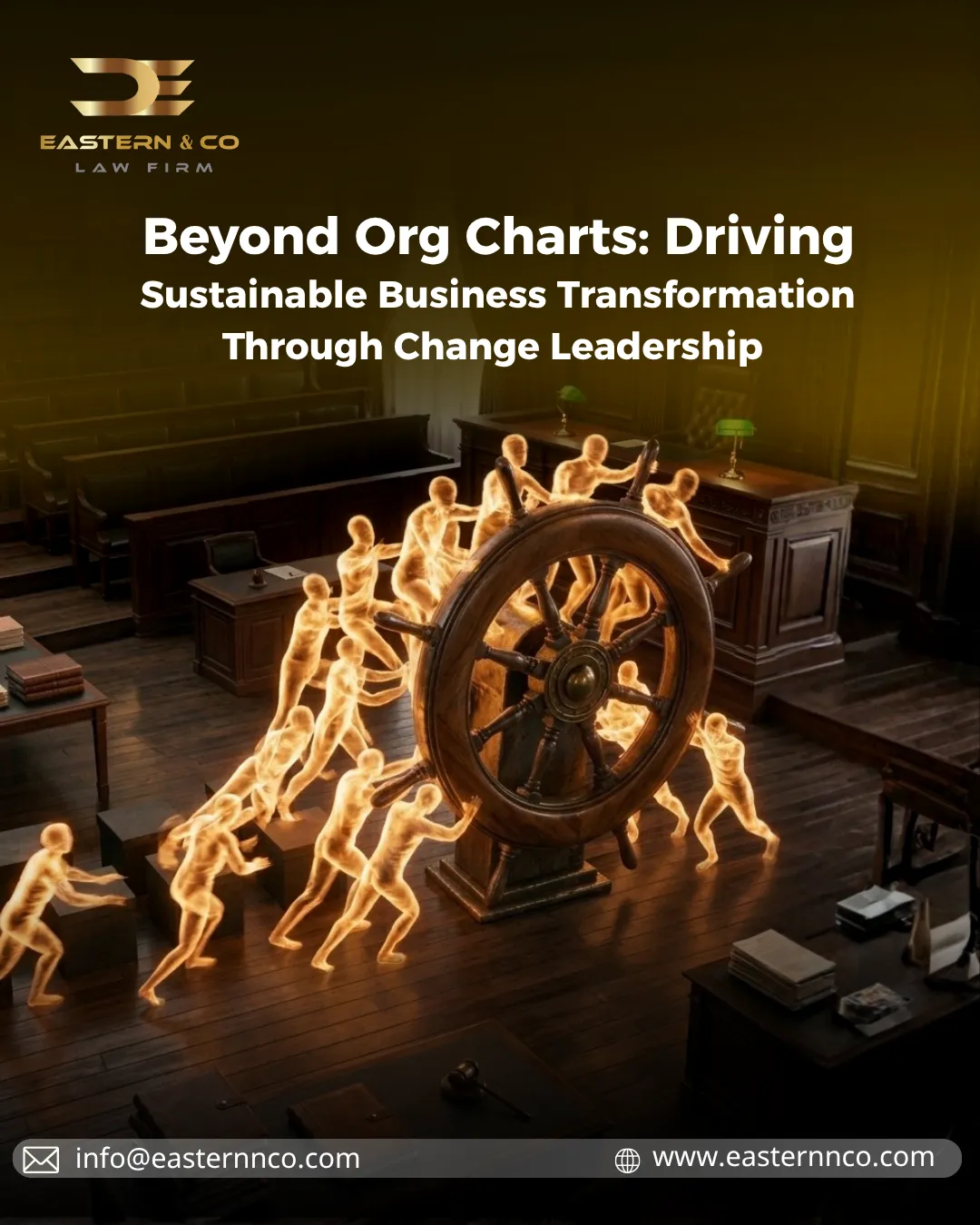
Redesigning an organizational chart is straightforward on paper—aligning corporate culture, retaining key talent, and driving behavioural change across global business units is where transformation succeeds or fails.
Redesigning an organizational chart is straightforward on paper—aligning corporate culture, retaining key talent, and driving behavioural change across global business units is where transformation succeeds or fails. Neglecting workforce sentiment, executive misalignment, and operational resistance during restructuring leads to productivity slumps, talent drain, and strategic friction. To preserve enterprise value and ensure execution speed, a resilient Change Management strategy must execute three core pillars: Executive Alignment & Transparent Communication Establishing unified leadership messaging across all tiers to articulate the transformation’s "why," reduce uncertainty, and eliminate organizational anxiety. Talent Retention & Critical Capability Mapping Identifying high-performing talent and mission-critical roles early to deploy targeted retention incentives and succession coverage during transitions. Agile Governance & Continuous Feedback Loops Setting up cross-functional transition offices (PMO) with clear KPIs to monitor adoption rates, resolve bottlenecks, and pivot operational tactics in real time. The Takeaway: Successful corporate restructuring isn't about moving boxes on a chart—it’s about empowering people to execute a shared vision under new market realities.
Redesigning an organizational chart is straightforward on paper—aligning corporate culture, retaining key talent, and driving behavioural change across global business units is where transformation succeeds or fails.
Neglecting workforce sentiment, executive misalignment, and operational resistance during restructuring leads to productivity slumps, talent drain, and strategic friction.
To preserve enterprise value and ensure execution speed, a resilient Change Management strategy must execute three core pillars:
Executive Alignment & Transparent Communication
Establishing unified leadership messaging across all tiers to articulate the transformation’s "why," reduce uncertainty, and eliminate organizational anxiety.
Talent Retention & Critical Capability Mapping
Identifying high-performing talent and mission-critical roles early to deploy targeted retention incentives and succession coverage during transitions.
Agile Governance & Continuous Feedback Loops
Setting up cross-functional transition offices (PMO) with clear KPIs to monitor adoption rates, resolve bottlenecks, and pivot operational tactics in real time.
The Takeaway: Successful corporate restructuring isn't about moving boxes on a chart—it’s about empowering people to execute a shared vision under new market realities.
